


Eyelash extensions can create fuller, longer-looking lashes without daily mascara, but there eventually comes a time when you want them removed. Maybe your extensions have started growing out unevenly, you are taking a break from lash treatments, or you simply want to return to your natural lashes.
So, what is the fastest way to remove eyelash extensions at home?
The safest answer is important: professional removal by a trained lash technician is usually the fastest and safest option because professionals use products and techniques designed to loosen extension adhesive while protecting the natural lashes and eyes. Trying to pull extensions off yourself can remove natural eyelashes or irritate the delicate eye area. (All About Vision)
If professional removal isn’t possible, you can encourage extensions to loosen gradually at home by using warm water or a warm compress followed by an oil-based facial cleanser or eye-area product, provided the product is intended for use around the eyes. The key is patience—never pull, pick, cut, or aggressively rub the extensions.
This guide explains the safest at-home approach, what methods to avoid, how long removal may take, and how to protect your natural lashes during the process.
What Is the Fastest Way to Remove Eyelash Extensions at Home?
If you need the extensions removed immediately, going back to your lash technician is generally preferable.
For at-home removal, a relatively gentle approach is:
- Clean your hands and face.
- Apply a warm compress to the closed eyelids.
- Use an eye-safe oil-based cleanser around the lashes.
- Gently massage without pulling.
- Rinse thoroughly.
- Repeat the process over several cleansing sessions if necessary.
- Allow stubborn extensions to shed naturally.
Oil-based cleansers can help weaken some lash adhesives over time, although they should not be expected to make an entire professional extension set slide off instantly. All About Vision notes that allowing extensions to shed naturally is likely the safest approach and that oil-based cleansers or eye creams may help speed up the process by loosening adhesive. (All About Vision)
That means the fastest safe home method isn’t aggressive removal—it is encouraging the adhesive to loosen while avoiding damage to your real lashes.
Why Eyelash Extensions Can Be Difficult to Remove
Professional eyelash extensions aren’t the same as strip lashes.
Strip lashes are typically attached temporarily along the eyelid and removed at the end of the day. Individual lash extensions, however, are attached to natural eyelashes with stronger adhesive and are intended to remain in place for several weeks.
This is why simply washing your face doesn’t immediately remove them.
Extensions gradually fall out as the natural eyelashes complete their growth and shedding cycle. All About Vision reports that lash extensions may naturally shed over approximately six to eight weeks, although individual results vary. (All About Vision)
Trying to speed this process up by pulling on the extensions can pull your natural eyelashes out with them.
Step 1: Wash Your Hands Before Touching Your Eyes
Before attempting any lash-removal method, thoroughly wash and dry your hands.
This step may sound basic, but the eye area is delicate. Introducing bacteria or contaminated products around the eyelid can increase the risk of irritation or infection.
The FDA recommends maintaining good hygiene when using products around the eyes and stopping use of any eye cosmetic that causes irritation. (U.S. Food and Drug Administration)
Avoid touching your eyes with dirty fingers, makeup brushes, cotton pads, or reusable tools that haven’t been cleaned.
Step 2: Remove Makeup Gently
Remove foundation, eyeshadow, eyeliner, and other facial makeup before working on the extensions.
Avoid aggressive rubbing.
If you are using an eye makeup remover, make sure the manufacturer indicates that it is suitable for use around the eyes.
You don’t need to scrub the lashes until they start falling out. The objective is simply to create a clean area before beginning the loosening process.
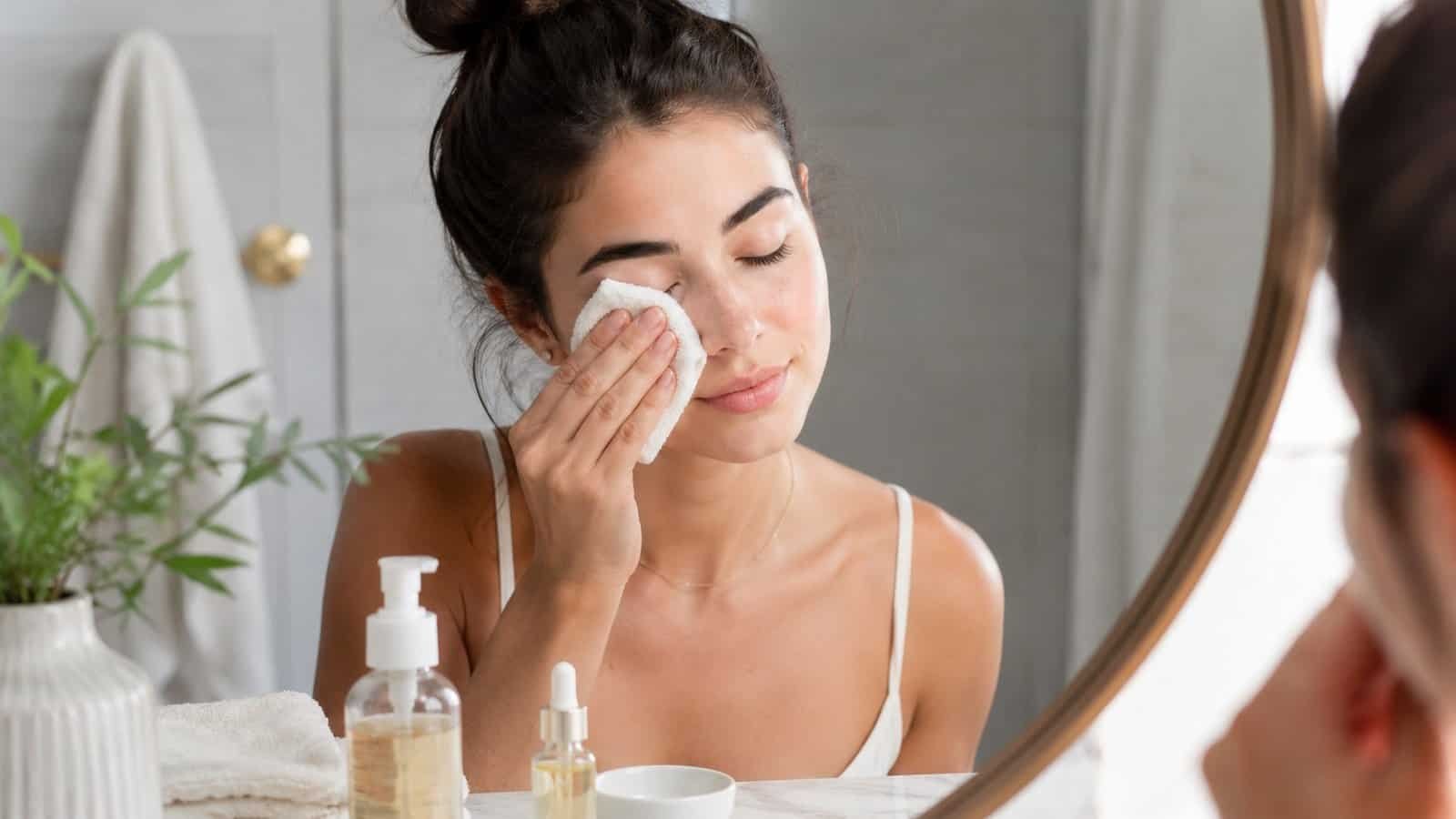
Step 3: Use a Warm Compress
Soak a clean washcloth in comfortably warm—not hot—water.
Wring out the excess water and hold the cloth gently over your closed eyes for several minutes.
Warmth and moisture may help soften buildup around the lash line and make cleansing easier.
Alternatively, taking a warm shower before cleansing the lashes may provide a similar effect.
Avoid extremely hot water or steam directly against your eyes. The eyelid skin is thin and sensitive, and very hot temperatures can cause irritation or injury.
Step 4: Apply an Oil-Based Cleanser
After warming and cleaning the lashes, an oil-based cleanser designed for facial or eye-area use may help loosen the adhesive gradually.
Oil-based products are normally discouraged when someone wants their extensions to last because they can interfere with extension retention. Healthline and All About Vision both note that oil-based products may weaken lash adhesive. (All About Vision)
Apply a small amount according to the product directions.
Keep your eyes closed and gently work the cleanser along the lash area without forcing the lashes downward.
The goal isn’t to pull the extensions loose. Instead, allow the cleanser to work gradually on the adhesive.
Then rinse carefully with lukewarm water.
Step 5: Gently Massage—Don’t Pull
One of the biggest mistakes people make when removing eyelash extensions at home is grabbing the extension and pulling it until it comes off.
Even when an extension appears loose, it may still be bonded to your natural lash.
Pulling can:
- Break natural eyelashes
- Pull lashes from their follicles
- Irritate the eyelid
- Cause uncomfortable tugging
- Leave temporary gaps in the lash line
DIY removal can result in accidental loss of natural eyelashes, according to medically reviewed eye-care guidance. (All About Vision)
Instead, gently massage the closed lash line with clean fingertips using minimal pressure.
If an extension isn’t sliding away easily, leave it alone.
Step 6: Let Loose Extensions Come Away Naturally
After cleansing, you may notice some extensions separating.
Only allow extensions that are already completely loose to wash away naturally.
Never use tweezers to pull individual extensions from your natural eyelashes.
Using pointed tools close to your own eyes while trying to look in a mirror creates an unnecessary risk of accidentally scratching or poking the eye.
Cleveland Clinic warns that placing sharp objects close to eyelashes can cause eye or eyelid injury and may introduce bacteria. (Cleveland Clinic)
If the lash doesn’t release without pulling, it isn’t ready.
Step 7: Repeat Rather Than Force It
One treatment may not remove an entire set of professional eyelash extensions.
That is normal.
Repeat gentle cleansing during your normal skincare routine rather than trying increasingly aggressive methods.
Some lashes may loosen quickly while others remain firmly attached.
Allowing removal to happen gradually gives your natural eyelashes a better chance of staying intact.
If you absolutely need the complete set removed immediately, that is a good point to schedule professional removal instead of escalating your DIY approach.
How Long Does It Take to Remove Eyelash Extensions at Home?
There is no guaranteed removal time.
Extensions that are already several weeks old and beginning to grow out may loosen faster than a recently installed set.
The adhesive also matters.
Professional extension adhesives are designed for durability, and different formulas respond differently to skincare products and moisture.
You may see several extensions loosen after the first few cleansing sessions, while others may stay attached until the natural eyelash sheds.
Extensions can naturally remain for several weeks as your lashes move through their growth cycle. (All About Vision)
The safest strategy is therefore to think in terms of gradual loosening rather than instant removal.
Can Coconut Oil Remove Eyelash Extensions?
Coconut oil is frequently recommended online for removing extensions.
Oil may weaken certain lash adhesives, but that doesn’t mean coconut oil will instantly dissolve professional extension glue.
There is another consideration: not every cosmetic ingredient is comfortable or appropriate for every person’s eye area.
If you choose an oil-containing product, using a properly formulated facial or eye-area cleanser is generally more sensible than experimenting with household products around your eyes.
Stop immediately if you experience burning, significant redness, swelling, or irritation.
Can Olive Oil Remove Eyelash Extensions?
Olive oil is another popular DIY suggestion.
Some medically reviewed consumer health guidance has suggested warm compresses followed by oils such as olive oil as a way to encourage extensions to loosen. (Healthline)
However, professional lash adhesive shouldn’t be expected to disappear immediately when oil is applied.
Using more oil, rubbing harder, or repeatedly pulling on extensions won’t necessarily make removal safer or faster.
A gentle oil-based cleanser specifically formulated for cosmetic use around the face is a more controlled approach.
Can Vaseline Remove Eyelash Extensions?
Petroleum jelly is sometimes promoted online as a lash-glue remover.
However, you shouldn’t assume that petroleum jelly will safely dissolve professional eyelash-extension adhesive.
More importantly, products around the eyes should be used only as directed.
The FDA specifically advises consumers not to use cosmetics near the eyes unless they are intended for use in that area. (U.S. Food and Drug Administration)
Rather than experimenting with petroleum jelly, nail products, solvents, or household chemicals, use an appropriate eye-area cosmetic cleanser or see a professional.
Does Steam Remove Eyelash Extensions?
Warmth and humidity may help make the lashes easier to clean, but steam shouldn’t be treated as an instant adhesive remover.
Standing over boiling water with your face close to the steam is unnecessary and carries the risk of burns.
A safer option is simply:
- Take a comfortably warm shower, or
- Apply a clean warm compress to closed eyelids.
Then follow with gentle cleansing.
You may need to repeat this process rather than expecting the entire lash set to come off at once.
Should You Use Professional Lash Glue Remover at Home?
Professional lash-extension remover may appear to offer the fastest DIY solution, but using strong removal chemicals on yourself can introduce additional risk.
A trained lash technician can keep the eyes closed and protected while carefully applying remover to the adhesive.
Performing the same procedure on yourself means working extremely close to your own open or partially closed eyes.
All About Vision notes that at-home lash removal can cause irritation, natural eyelash loss, and reactions to removal products. (All About Vision)
Eyelash adhesives and removal chemicals can also contribute to eye-area reactions and irritation. EyeWiki, maintained by contributors affiliated with the American Academy of Ophthalmology, notes that eyelash extensions have been associated with problems including irritation, allergic blepharitis, keratoconjunctivitis, and other ocular complications. (EyeWiki)
For those reasons, strong professional adhesive removers are better handled by trained professionals.
What Not to Use to Remove Eyelash Extensions
Trying to make removal faster can sometimes make it considerably more dangerous.
Avoid using:
Acetone or Nail Polish Remover
Never use nail polish remover around your eyelashes.
These products aren’t designed for the eye area.
Household Adhesive Removers
Products intended for removing glue from furniture, fabric, floors, nails, automotive surfaces, or household objects should never be used around the eyes.
Tweezers to Pull Extensions
Tweezers are commonly used by lash technicians because professionals can clearly see and isolate individual lashes while the client’s eyes remain closed.
Trying to pull your own extensions with tweezers is very different.
Avoid it.
Scissors
Don’t cut extensions close to your eyelids.
Apart from the obvious injury risk, cutting lashes doesn’t remove the adhesive and may accidentally shorten your natural eyelashes.
Aggressive Scrubbing
Scrubbing won’t necessarily dissolve the adhesive.
Instead, it can irritate the eyelids and pull on natural lashes.
Picking With Your Fingernails
Picking extensions repeatedly may cause natural lashes to come out with the artificial ones.
Let resistant extensions remain until the bond weakens.
Why Pulling Off Eyelash Extensions Is a Bad Idea
Your extension is attached to a natural eyelash.
When you pull hard enough to overcome the adhesive, you may remove both.
Occasionally losing a natural eyelash is part of normal lash shedding. Repeatedly pulling healthy lashes out prematurely, however, creates unnecessary trauma.
All About Vision specifically warns that trying to remove extensions yourself by plucking them can pull out natural lashes and may leave noticeable gaps. (All About Vision)
Therefore, resistance is your signal to stop—not to pull harder.
How to Care for Natural Lashes After Extension Removal
Once your extensions are gone, treat your natural eyelashes gently.
Clean the Lash Line
Use a gentle cleanser to remove leftover makeup, oil, and debris.
Keeping eyelashes clean is important for maintaining healthy eyelids. Cleveland Clinic notes that poor lash hygiene may contribute to irritation and infection. (Cleveland Clinic)
Avoid Rubbing Your Eyes
Your lashes may initially look shorter or thinner because you have become accustomed to the dramatic appearance of extensions.
Don’t respond by rubbing, pulling, or aggressively brushing them.
Take a Break From Heavy Eye Treatments
If your eyelids feel irritated after removal, consider avoiding additional cosmetic lash treatments until the skin and eyes feel normal again.
Brush Carefully
A clean lash spoolie can help keep natural eyelashes neat, but use minimal pressure.
When Should You Stop DIY Removal?
Stop immediately if you develop:
- Significant eye pain
- Severe burning
- Increasing redness
- Swollen eyelids
- Persistent itching
- Excessive tearing
- Unusual discharge
- Sensitivity to light
- Blurred or changed vision
The FDA advises stopping eye cosmetics when they cause irritation and seeking medical attention if irritation persists. (U.S. Food and Drug Administration)
All About Vision similarly recommends seeing an eye doctor promptly if pain, redness, vision changes, or other complications occur after lash application or removal. (All About Vision)
Don’t continue experimenting with removal products when your eye is already irritated.
At-Home Removal vs. Professional Removal
| Method | Speed | Risk to Natural Lashes | Best For |
|---|---|---|---|
| Professional removal | Fastest | Lower when properly performed | Complete removal |
| Oil-based cleanser | Gradual | Low when used gently | At-home loosening |
| Warm compress | Gradual | Low | Supporting gentle removal |
| Natural shedding | Slowest | Lowest | No urgent removal |
| Pulling extensions | Fast but risky | High | Not recommended |
| Strong DIY glue remover | Potentially fast | Higher eye-irritation risk | Better left to professionals |
If your goal is getting every extension off as quickly as possible, professional removal wins.
If your goal is removing extensions at home while protecting your natural lashes, patience wins.
Frequently Asked Questions
What is the fastest way to remove eyelash extensions at home?
Use a warm compress followed by gentle cleansing with an eye-safe oil-based cleanser and allow loosened extensions to shed without pulling. Oil-based products may weaken some lash adhesives, but complete removal may require repeated cleansing sessions. (All About Vision)
Can eyelash extensions be removed immediately at home?
Trying to remove an entire professional set immediately can increase the temptation to pull or use strong chemicals. If you need complete same-day removal, professional lash removal is the safer choice.
Will eyelash extensions eventually fall out naturally?
Yes. Extensions typically shed as your natural eyelashes complete their growth cycle. They may remain for several weeks before naturally falling away. (All About Vision)
Can I pull extensions off when they start growing out?
No. Even an extension that looks loose may still be attached to a natural eyelash. Let it release naturally or have it professionally removed.
Will removing extensions damage my natural lashes?
Proper professional removal or patient natural shedding should minimize damage. Pulling, picking, aggressive rubbing, and improper DIY removal can remove or break natural eyelashes. (All About Vision)
What should I do if lash glue gets into my eye?
Do not continue attempting cosmetic removal. Rinse as appropriate and seek prompt professional medical advice, especially if there is pain, persistent redness, difficulty opening the eye, or vision changes.
Final Thoughts
So, what is the fastest way to remove eyelash extensions at home?
If you are determined to remove them yourself, start with a warm compress and an eye-safe oil-based cleanser, massage gently, rinse, and repeat during your normal cleansing routine. Allow extensions that remain firmly attached to shed naturally instead of pulling them.
But if “fastest” means you want every extension gone today, visiting a trained lash technician is generally the better solution.
The most important rule is simple: never sacrifice your natural lashes or eye safety just to make the extensions come off faster.
Avoid acetone, household glue removers, aggressive rubbing, tweezers, scissors, and forceful pulling. Your eyelids and natural lashes are far more valuable than saving a little time during removal.
If you experience significant redness, swelling, pain, discharge, persistent irritation, or changes in vision, stop the removal process and contact an eye-care professional.