
If you made a big batch of chicken salad and can’t finish it, here’s the short answer: USDA food-safety guidance advises against freezing chicken salad made with mayonnaise, and FoodSafety.gov notes that chicken salad doesn’t freeze well. Keep it in the refrigerator at 40°F (4°C) or below and eat it within 3 to 4 days. If you want to prep ahead, freeze the cooked chicken instead and mix the salad fresh.
Below you’ll find why mayonnaise-based chicken salad and the freezer don’t get along, a simple make-ahead method that does work, and the storage habits that keep chicken salad safe to eat.
Chicken Salad Storage at a Glance
| Food | Refrigerator (40°F / 4°C or below) | Freezer (0°F / -18°C or below) |
|---|---|---|
| Chicken salad made with mayonnaise | 3 to 4 days | Does not freeze well; not recommended |
| Plain cooked chicken (leftovers) | 3 to 4 days | About 4 months |
Can You Freeze Chicken Salad?
You can technically put chicken salad in the freezer, but it isn’t recommended. FoodSafety.gov’s cold storage chart lists chicken salad as a food that “does not freeze well,” and the USDA Food Safety and Inspection Service (FSIS) advises not freezing chicken salad if it contains mayonnaise.
Why mayonnaise-based chicken salad doesn’t freeze well
The problem is mostly texture. Mayonnaise is an emulsion, and freezing breaks it apart. The National Center for Home Food Preservation lists mayonnaise and salad dressing among foods that separate when frozen, and notes that celery turns limp and water-logged.
The result after thawing is usually a watery, separated salad with limp celery, not the creamy chicken salad you started with.
Is frozen chicken salad unsafe, or just unappealing?
It’s important to separate food quality from food safety. Neither FoodSafety.gov nor FSIS describes freezing itself as making chicken salad unsafe. The issue they flag is that it doesn’t freeze well, which is about texture and quality.
What does matter for safety is how the salad was handled before and after freezing: how long it sat out, how long it was refrigerated, and how it was thawed. If you have already frozen some chicken salad, thaw it in the refrigerator, not on the counter, and expect the texture to be noticeably different.
What to Freeze Instead: A Make-Ahead Method That Works
If your goal is to have chicken salad ready on busy days, freeze the part that freezes well and add the rest fresh.
Freeze the cooked chicken
Cook and chill the chicken, then shred or dice it. Pack it in airtight freezer containers or freezer bags, pressing out as much air as you can, and label each portion with the date. FSIS lists about 4 months in the freezer for leftover cooked chicken. Our guide to how long cooked chicken lasts in the fridge covers freezing, thawing and reheating it in more detail.
Thaw it safely
Move a portion of frozen chicken to the refrigerator the night before you need it. FSIS describes refrigerator thawing as the safest method, so it’s worth planning a day ahead.
Mix the salad fresh
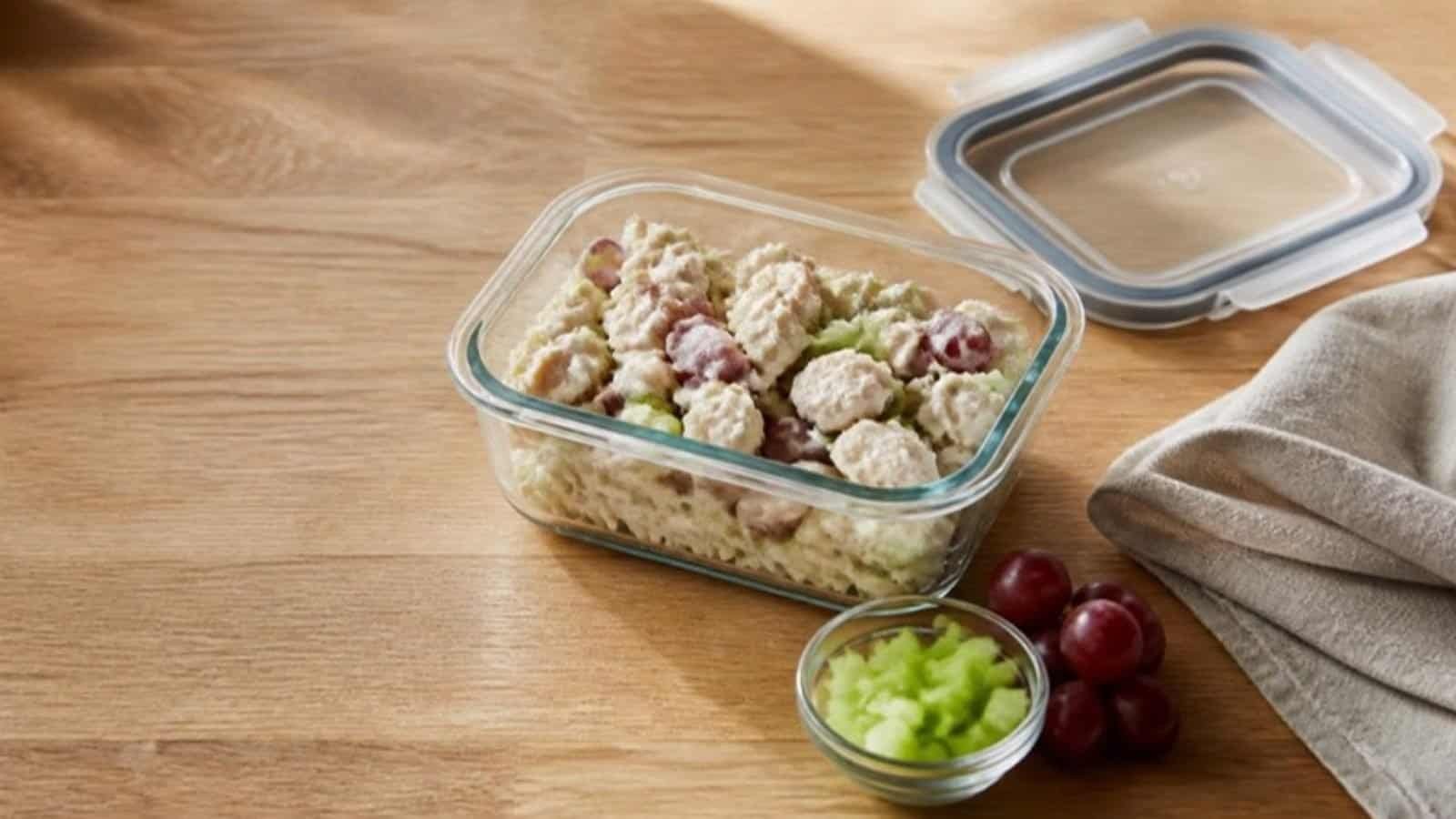
Once the chicken is thawed, stir in the mayonnaise, celery, onions, grapes or whatever your family likes. Mix only as much as you’ll eat within 3 to 4 days.
How Long Does Chicken Salad Last in the Fridge?
Chicken salad lasts 3 to 4 days in the refrigerator when it is kept at 40°F (4°C) or below. That is the current recommendation in FoodSafety.gov’s cold storage chart, and it is the guideline we follow.
You may see a slightly longer range on one USDA chicken-storage page. To keep things simple and conservative, plan to finish chicken salad within 3 to 4 days of making it.
Homemade vs store-bought chicken salad
The FoodSafety.gov chart does not set different times for homemade and store-prepared chicken salad. For packaged chicken salad, also check the date on the container. FSIS explains that most date labels (such as “Best if Used By”) describe peak quality rather than safety, so they don’t replace good storage habits. Once you open the container, keep it cold and use it promptly.
How to Store Chicken Salad Safely
Good storage starts the moment the salad is made.
Follow the 2-hour rule
Don’t leave chicken salad at room temperature for more than 2 hours, or more than 1 hour if the temperature is above 90°F, such as at an outdoor picnic in summer. That’s the FSIS rule for perishable foods, and it applies at parties, potlucks and family gatherings.
Chill it fast in covered, shallow containers
FSIS recommends dividing leftovers into shallow containers so they cool quickly in the refrigerator. Cover the container, and keep your refrigerator at 40°F (4°C) or below. For other dishes, our food-by-food chart of how long leftovers last in the fridge covers storage times for common cooked foods.
Keep it cold on the go
Packing chicken salad for lunch? FSIS recommends an insulated, soft-sided lunch bag with at least two cold sources, such as two frozen gel packs. After lunch, discard any leftover perishable food rather than bringing it home to eat later.
How to Tell If Chicken Salad Has Gone Bad
Storage time and temperature are the most reliable guides. Throw chicken salad away if it has been refrigerated longer than 3 to 4 days, or if it sat out longer than 2 hours (1 hour above 90°F), even if it looks and smells fine.
That’s because looks and smell can’t confirm that food is safe. The U.S. Food and Drug Administration warns that food can make you very sick even when it doesn’t look, smell or taste spoiled. FSIS also explains that the bacteria that cause foodborne illness are different from the spoilage bacteria that create off odors or textures.
An off smell, sour taste, slimy texture or visible mold are reasons to discard chicken salad right away. But the absence of those signs does not mean it’s safe, and you should never taste questionable chicken salad to decide whether it’s still good. When you’re unsure, throw it out.
Budget Tips: Make Chicken Salad Without Waste
Chicken salad is a great way to stretch one batch of chicken across several meals. A few habits keep it from turning into wasted food:
- Cook once, use twice. Cook extra chicken for dinner, then set some aside for chicken salad or freeze it in portions for later.
- Mix small batches. Make only as much chicken salad as your family will eat in 3 to 4 days.
- Label everything. Write the date on containers so no one has to guess how old the salad is.
- Freeze the chicken, not the salad. Frozen portions of cooked chicken give you a head start on quick lunches without the texture problems of frozen mayonnaise.
Planning around leftovers like this is one of the simplest ways to keep your grocery bill under control. If you’re working out what your family should spend each month, our guide to a realistic grocery budget for a family of four breaks down the latest USDA food cost figures.
Frequently Asked Questions
Can you freeze chicken salad with mayo?
It isn’t recommended. USDA guidance advises against freezing chicken salad made with mayonnaise, and FoodSafety.gov lists chicken salad as a food that doesn’t freeze well. Mayonnaise separates when frozen, and the salad usually turns watery and separated after thawing. For make-ahead meals, freeze the cooked chicken and add mayonnaise after thawing.
How long can chicken salad sit out?
No more than 2 hours at room temperature, or 1 hour if the temperature is above 90°F. After that, throw it out, even if it looks and smells fine. This is the USDA rule for perishable foods like chicken salad.
Can you freeze chicken salad sandwiches?
Freezing assembled chicken salad sandwiches isn’t recommended for the same reason: the mayonnaise-based filling doesn’t freeze well. Freeze cooked chicken portions instead and assemble sandwiches fresh.
How long is store-bought chicken salad good for?
Use the same 3-to-4-day refrigerator guideline and check the date on the package. Keep the container in the refrigerator at 40°F (4°C) or below and don’t leave it out for more than 2 hours.
Is chicken salad still good after 5 days?
We don’t recommend eating it. Our guideline follows FoodSafety.gov’s current recommendation of 3 to 4 days in the refrigerator. If chicken salad is older than that, discard it rather than relying on how it looks or smells.
References
- FoodSafety.gov. Cold Food Storage Chart. https://www.foodsafety.gov/food-safety-charts/cold-food-storage-charts
- USDA Food Safety and Inspection Service. Chicken from Farm to Table. https://www.fsis.usda.gov/food-safety/safe-food-handling-and-preparation/poultry/chicken-farm-table
- USDA Food Safety and Inspection Service. Leftovers and Food Safety. https://www.fsis.usda.gov/food-safety/safe-food-handling-and-preparation/food-safety-basics/leftovers-and-food-safety
- USDA Food Safety and Inspection Service. Keeping “Bag” Lunches Safe. https://www.fsis.usda.gov/food-safety/safe-food-handling-and-preparation/food-safety-basics/keeping-bag-lunches-safe
- USDA Food Safety and Inspection Service. Food Product Dating. https://www.fsis.usda.gov/food-safety/safe-food-handling-and-preparation/food-safety-basics/food-product-dating
- U.S. Food and Drug Administration. Are You Storing Food Safely? https://www.fda.gov/consumers/consumer-updates/are-you-storing-food-safely
- National Center for Home Food Preservation. Foods That Do Not Freeze Well. https://nchfp.uga.edu/how/freeze/freeze-general-information/foods-that-do-not-freeze-well/