
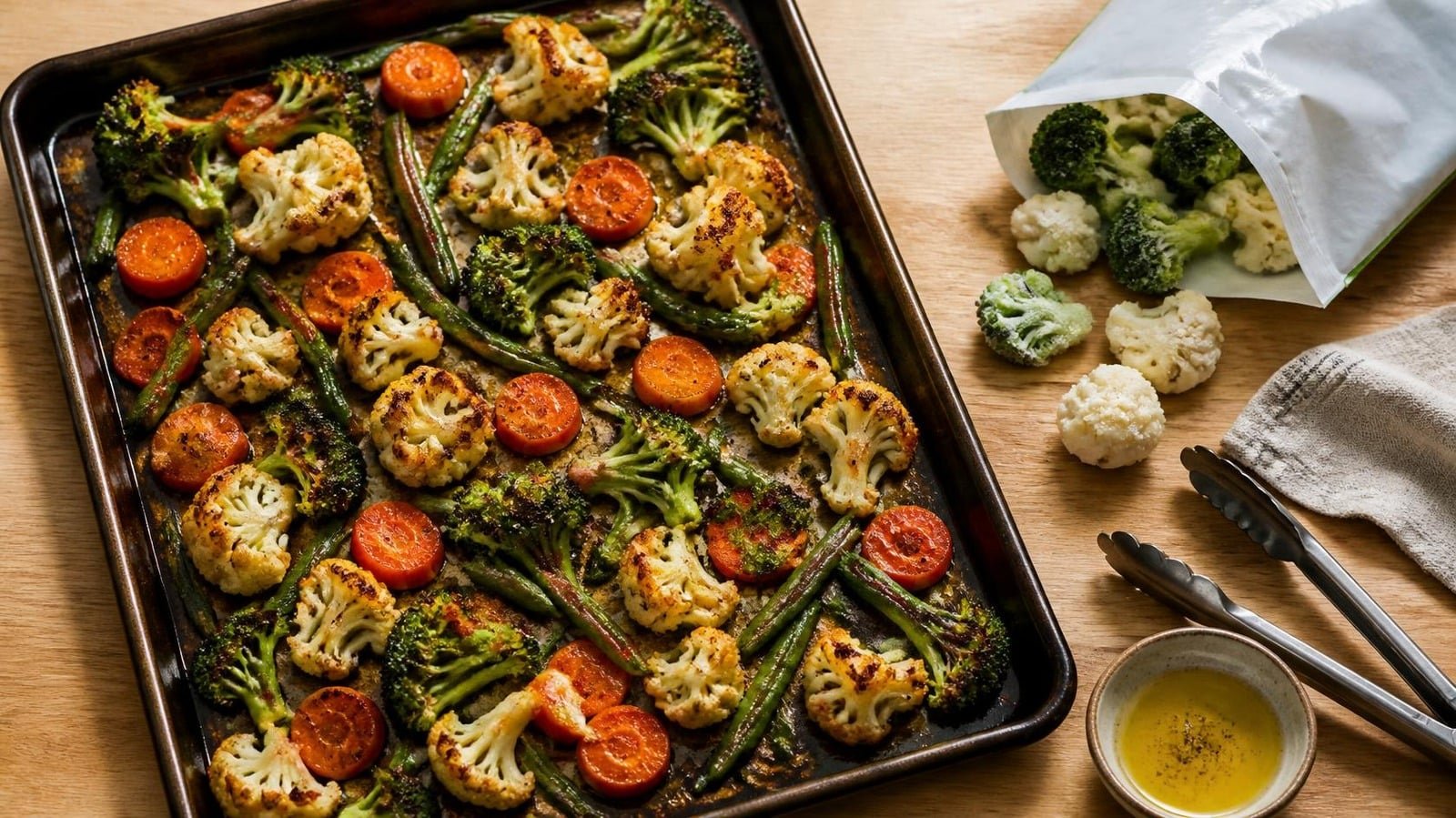
Frozen vegetables are one of the cheapest ways to get a vegetable side on the table any night of the week, but steaming or microwaving them can leave you with a soft, watery pile. Roasting fixes that. With a hot oven, a hot pan and enough space between the pieces, frozen broccoli, cauliflower, green beans and mixed blends come out browned at the edges and tender in the middle, and you don’t have to thaw them first.
This guide covers how to roast frozen vegetables step by step, the temperature and timing to use, why they turn soggy, which vegetables roast best from frozen, and how to store the leftovers safely.
Quick Answer: How to Roast Frozen Vegetables
To roast frozen vegetables, put a sheet pan in the oven and heat it to 425°F. Don’t thaw the vegetables. Spread them on the hot pan in a single layer with space between the pieces, toss with a little oil and salt, and roast for about 20 to 25 minutes, flipping once, until the edges are browned. Dense vegetables and larger pieces take longer.
- Preheat the oven to 425°F with an empty sheet pan inside.
- Keep the vegetables frozen until the pan is hot. Break up any clumps.
- Toss the frozen pieces with 1 to 2 tablespoons of oil and a pinch of salt (or roast them dry and add oil at the end; see the two methods below).
- Spread them on the hot pan in one layer. Use two pans if they don’t fit without touching.
- Roast about 15 to 20 minutes, flip, then roast about 5 to 10 minutes more until browned and tender.
- Season and serve right away, while the edges are still crisp.
Can You Roast Frozen Vegetables Without Thawing Them?
Yes, and you should. Roasting frozen vegetables straight from the bag gives better results than thawing them first. Thawed vegetables sit in their own meltwater and go limp before they ever reach the oven, so they steam instead of browning. Frozen pieces hit the hot pan with their surface ice still in place, and most of that moisture cooks off quickly in a 400°F to 425°F oven.
Roasting from frozen also saves time and reduces handling. There’s no bowl of thawing vegetables sitting on the counter, and dinner can go from freezer to table in under 30 minutes.
Frozen vegetables are meant to be cooked
Most bags of frozen vegetables are not ready-to-eat. The vegetables are usually blanched (briefly heated) before freezing to protect color and texture, but that step isn’t designed to make them safe to eat straight from the bag. Freezing doesn’t kill bacteria either; it only stops them from growing while the food stays frozen. That’s why the USDA’s FoodKeeper guidance for vegetables bought frozen says to keep them frozen and cook them as directed.
This matters more than many people think. In a 2026 University of Minnesota study published in the Journal of Food Protection, about one in six surveyed adults said they ate at least one type of frozen vegetable without cooking it, most often leafy greens. Roasting until the vegetables are hot all the way through and tender takes care of this. Check the package for anything specific to that product, especially if you plan to use the vegetables cold in a salad or smoothie.
Why Roasted Frozen Vegetables Turn Soggy (and How to Fix It)
Frozen vegetables carry more surface moisture than fresh ones. Soggy results almost always come from that water getting trapped. These are the usual causes.
The pan is too crowded
When pieces touch or pile up, the steam they release has nowhere to go, so the vegetables cook in it. Extension food-preparation guides for roasting give the same rule for fresh vegetables: arrange them in a single layer so the pieces don’t touch, because piling them up steams them. With frozen vegetables, the rule matters even more. If a large bag doesn’t fit on one pan, use two.
The oven or the pan isn’t hot enough
At 350°F, frozen vegetables thaw slowly and release their water before they can brown. A 400°F to 425°F oven drives the water off fast. Preheating the sheet pan helps even more, because the vegetables start sizzling as soon as they touch the metal.
The vegetables were thawed or rinsed
Thawing or rinsing adds water you’ll then have to cook off. Keep the bag in the freezer until the pan is hot, and simply break apart any frozen clumps by hand or by tapping the sealed bag on the counter.
The pieces are covered in sauce or heavy seasoning
Vegetables frozen with butter sauce or a seasoning packet are designed for the cooking method on the package. Sauces and sugary glazes can scorch at roasting temperatures. Plain frozen vegetables are the best choice for roasting, and they’re usually the cheapest option too.
What Temperature and How Long to Roast Frozen Vegetables
Roast frozen vegetables at 400°F to 425°F. Most published methods for frozen vegetables fall in that range, and 425°F is the most common choice for getting browned edges. Exact timing depends on the vegetable, the size of the pieces, how full the pan is and your oven, so use the times below as a starting point and check early.
| Method | Oven | Approximate time | Notes |
|---|---|---|---|
| Oil first, flip once | 425°F | 18 to 20 minutes, flip, then about 5 minutes more | Works well for broccoli, cauliflower and mixed blends. Good all-purpose method. |
| Dry roast on a preheated pan, oil after | 400°F | 15 to 20 minutes | Check small pieces at 15 minutes. Toss with oil and seasoning after roasting. |
| Dense or large pieces (butternut squash cubes, carrot coins, potatoes) | 425°F | Longer than the times above | Check every 5 minutes after the first 20 minutes until fork-tender and browned. |
The vegetables are done when the edges are deep golden brown and a fork slides easily into the thickest piece. If they’re tender but still pale, give them a few more minutes. If the edges brown before the centers soften, lower the heat to 400°F next time or cut the next batch into smaller pieces.
Oil Before or After? Two Methods That Work
There are two well-tested ways to handle the oil, and both work. Choose based on what you have time for.
Method 1: Oil and salt before roasting
Toss the frozen vegetables with about 1 tablespoon of oil for a small bag (around 10 to 12 ounces) or up to 2 tablespoons for a larger amount, plus a pinch of salt. Spread them on the pan, roast until the first side is well browned, flip, and finish. This gives the most even browning and is the easiest method for weeknights.
Method 2: Roast dry, then add oil
Some dietitians recommend roasting frozen vegetables with no oil at all on a hot, parchment-lined pan, because oil can trap moisture against frozen surfaces. Once the vegetables are browned and tender, toss them with olive oil and seasoning, then return them to the oven for a couple of minutes to toast the spices. This method is a good choice when your vegetables have a lot of ice on them.
Step-by-Step: Roasting Frozen Vegetables in the Oven
What you need
- 1 bag (about 10 to 16 ounces) plain frozen vegetables
- 1 to 2 tablespoons vegetable or olive oil
- About ¼ teaspoon salt, plus pepper or other seasonings
- A large rimmed sheet pan (dark metal browns faster than light metal)
- Tongs or a thin metal spatula for flipping
Method
- Heat the pan. Place the sheet pan on a rack in the upper-middle part of the oven and heat to 425°F. Give the pan at least 10 minutes in the oven once it reaches temperature.
- Prep the vegetables. Break up frozen clumps. If any pieces are very large, such as whole broccoli crowns, cut them in half while frozen so everything cooks at the same rate.
- Season. In a large bowl, toss the frozen vegetables with oil and salt (Method 1), or leave them plain (Method 2).
- Spread them out. Carefully pull out the hot pan and spread the vegetables in a single layer with gaps between the pieces. Use oven mitts; the pan is very hot.
- Roast and flip. Roast until the bottoms are well browned, about 15 to 20 minutes. Flip with tongs or a spatula, then roast about 5 to 10 minutes more.
- Finish. Taste and add more salt, pepper, a squeeze of lemon or grated cheese. Serve hot.
Best Frozen Vegetables for Roasting
Sturdy vegetables with some structure roast best from frozen. Small or leafy vegetables are better suited to sautéing, soups or casseroles.
| Frozen vegetable | How it roasts | Tip |
|---|---|---|
| Broccoli florets | Very good | Florets char nicely; stems take a little longer. |
| Cauliflower florets | Very good | Benefits from the full time for deep browning. |
| Mixed blends (broccoli, cauliflower, carrots) | Very good | Carrot pieces may need a few extra minutes. |
| Brussels sprouts | Good | Halve large sprouts while frozen for faster cooking. |
| Green beans | Good | Thin beans cook quickly; check early. |
| Butternut squash cubes | Good | Needs longer; space well so cubes brown rather than steam. |
| Corn kernels | Fair | Can brown in spots; best mixed with other vegetables. |
| Peas | Fair | Small and quick to shrivel; better stirred in at the end. |
| Spinach and other leafy greens | Poor | Too much water to roast. Cook them in soups, sauces or casseroles. |
Budget-Friendly Seasoning Ideas
Salt and pepper are all you really need, but a few pantry seasonings can turn the same bag of vegetables into several different sides.
- Garlic and Parmesan: garlic powder before roasting, grated Parmesan in the last 3 minutes.
- Taco-style: chili powder, cumin and a squeeze of lime after roasting.
- Italian: dried oregano or an Italian blend, finished with a splash of red wine vinegar.
- Smoky: smoked paprika and onion powder.
- Sesame-ginger: toss hot vegetables with a little soy sauce, sesame oil and ground ginger after roasting so the sauce doesn’t burn.
Add delicate items such as cheese, fresh herbs, citrus juice and sauces at the end. Dry spices can go on before roasting.
Can You Roast Frozen Vegetables in an Air Fryer?
Yes. The same principles apply: don’t thaw, use a light coat of oil and avoid crowding the basket. Air fryer baskets are small, so cook in batches and shake the basket partway through. Models vary a lot, so start with your air fryer’s guidance for vegetables and check early the first time you try a new type.
How to Store and Reheat Roasted Vegetables
Roasted vegetables are best fresh from the oven, but leftovers are useful for lunches, grain bowls and omelets. Handle them like any other cooked leftovers:
- Refrigerate within 2 hours of cooking (within 1 hour if the room is above 90°F), in a shallow covered container.
- Use within 3 to 4 days from a refrigerator at 40°F or below.
- Freeze for up to about 1 to 2 months for best quality. Food kept at 0°F stays safe indefinitely, but texture and flavor fade over time.
- Reheat on a sheet pan in a hot oven or in a skillet so they don’t turn soft, until steaming hot throughout (165°F).
Unopened bags of frozen vegetables keep their best quality for about 10 to 18 months at 0°F. Once a bag is open, press out the air and seal it tightly. Grayish-brown, dry patches are freezer burn. They’re not a safety problem, just a quality one, and you can trim or discard those pieces. For storage times for other cooked foods, see our food-by-food chart of how long leftovers last in the fridge.
Are Frozen Vegetables as Healthy as Fresh?
Frozen vegetables can be just as nutritious as fresh ones, according to the CDC. The main thing to watch is what’s added: choose plain frozen vegetables without added salt, sugar or sauce, and season them yourself. Plain bags also give you the most control over sodium, which helps if you’re cooking for kids or anyone watching their salt.
Frozen vegetables also help a grocery budget. They’re already trimmed and cut, they last for months in the freezer, and you can use exactly what you need and save the rest, which means less produce going bad in the crisper drawer. If you’re working out how much to spend each month, our guides to how to budget for groceries and a realistic grocery budget for a family of 4 walk through the numbers.
Easy Ways to Use Roasted Frozen Vegetables
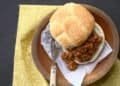
- Weeknight side: serve alongside slow cooker sloppy joes instead of chips or fries.
- Grain bowls: pile them over rice with a fried egg and a drizzle of sauce. If you cook rice ahead, here’s how long cooked rice is good for in the fridge.
- Sheet-pan dinner: roast vegetables on one side of the pan and warm leftover cooked chicken on the other for the last few minutes. Check how long cooked chicken lasts in the fridge before you use it.
- Pasta: toss with hot pasta, olive oil, garlic and Parmesan.
- Eggs: chop leftovers into omelets, frittatas or breakfast burritos.
Frequently Asked Questions
Do you need to thaw frozen vegetables before roasting?
No. Roast them straight from frozen. Thawing makes them release water before they reach the oven, which leads to steamed, soggy vegetables instead of browned ones.
How do you roast frozen vegetables without them getting soggy?
Use a hot oven (400°F to 425°F), preheat the sheet pan, spread the vegetables in a single layer with space between pieces, and don’t thaw or rinse them first. Use two pans rather than crowding one.
Can you eat frozen vegetables without cooking them?
It isn’t recommended for most products. Frozen vegetables are generally not ready-to-eat, and freezing doesn’t kill bacteria. Cook them as the package directs unless the label clearly says the product is ready to eat.
Can you roast different frozen vegetables on the same pan?
Yes, if they’re a similar size and density. Otherwise, give the denser vegetables (carrots, squash, potatoes) a head start, or put them on a separate pan so you can take each one out when it’s done.
References
- USDA and FoodSafety.gov, FoodKeeper App (Vegetables purchased frozen; Leftovers without meat, such as cooked vegetables).
- USDA Food Safety and Inspection Service, Freezing and Food Safety.
- FoodSafety.gov, 4 Steps to Food Safety.
- University of Minnesota School of Public Health, Many people eat frozen vegetables without cooking them, increasing food safety risks (study in the Journal of Food Protection, 2026).
- University of Maine Cooperative Extension, Keep it Safe: Cooking and Handling Frozen Vegetables (2025).
- FoodSafety.gov, Safe Minimum Internal Temperatures.
- Centers for Disease Control and Prevention, Tips for Increasing Vegetables and Fruits in Your Diet.
- Utah State University Extension, Roasting Vegetables (handout).
- Have A Plant, The Foundation for Fresh Produce, Can You Roast Frozen Veggies?
- Birds Eye, Roasted Frozen Vegetables.